GHRIGalápagos Habitat Restoration Institute

Field notes · 22 October 2026

From a seed bank
back to the wild

Scroll to follow the story

The news

A letter of support from Brest

Conservatoire botanique national de Brest

The story

1982

The last two plants

By the 1970s the species is close to extinction, and the Conservatoire’s founder, Jean-Yves Lesouëf, sets out to collect its seeds. In 1982 seeds are gathered from the last two plants known in the wild, on the Plaine Champagne, and stored in Brest.
1990

Gone from the wild

The species is declared extinct in the wild. Its future now sits in Brest, in seeds stored at −18 °C.

The seed bank

Seeds that will not germinate

The seeds are safe in the bank, but they cannot germinate on their own. Seed alone will not bring the species back.

1993

A world first

With INRA’s laboratory at Ploudaniel, the Conservatoire turns to biotechnology: embryos about a millimetre long are cut from the seeds under sterile conditions and grown on a nutrient medium. Whole plants are regenerated, a world first for conservation in the Conservatoire’s words. The published account gives the odds: three seedlings from 74 seeds.

Three founders

A species in three plants

Those seedlings became the three clones from which Brest’s collection was grown. Genetic fingerprinting later found no variation among the plants, and in cultivation they set no viable seed. From then on, the species depends on a few clonal lines kept alive, and on in vitro techniques.

2001

A second home

Two plants from one of the clones go to the Royal Botanic Gardens, Kew, in London, under an exchange programme. Kew becomes Brest’s partner in the work on the genus.

2009

Hundreds, in vitro

Cuttings root poorly, and there are too few plants and no viable seed. The Conservatoire turns to the Vegenov laboratory to multiply the plants by in vitro micropropagation: from 2009, hundreds are produced.

2016

A road map for the genus

With Kew’s team, Stéphane Buord co-authors a conservation road map for Cylindrocline (Acta Physiologiae Plantarum, 2016). It sets out a standard in vitro protocol started from the dormant buds of mature plants, and reports how its plants fared.

2021

The ground made ready

In Mauritius, with the National Parks and Conservation Service, plots are fenced against unwanted animals and cleared of every invasive plant: Conservation Management Areas. About thirty plants are acclimatised there.

2024

Home

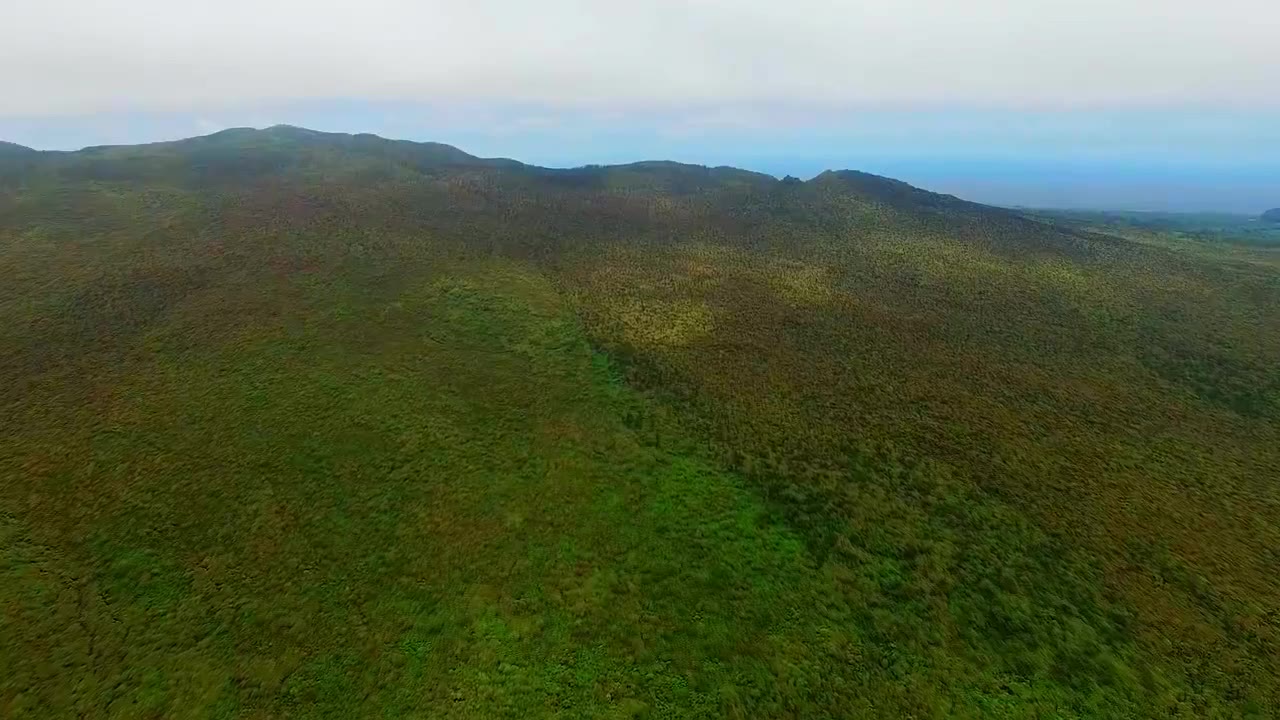
The Conservatoire announces the return of about a hundred plants born in Brest to these plots, under a precise protocol, nearly 35 years after the species vanished from the wild.

Thirty years, in six moves

  1. 01
  2. 02
  3. 03
  4. 04
  5. 05
  6. 06

The scientist

Dr Stéphane Buord

The Santa Cruz highlands

Why it matters for Galápagos

Two oceans,
one method

Brest Mauritius Santa Cruz, Galápagos Invitrolab, Quito
01Collect before it is too late

Seeds from the last two wild plants, 1982

A training set first, so the method exists before the rarest species need it

02Rescue what seed cannot

Embryo rescue, 1993

Embryo rescue, if needed: one of the four areas of Brest’s advice

03Keep the founder lines alive

Three clones, no genetic variation

Clonal lines kept for the long term from a small founder base; tissue culture to bank specific genotypes

04Multiply in vitro

Micropropagation with Vegenov, from 2009

Bench work with Invitrolab, our partner laboratory in Quito

05Clear the ground of invaders

Fenced plots cleared of invasive plants, 2021

Removing invasive blackberry from the Santa Cruz highlands: the Institute’s core work

06Return the plants

About a hundred plants returned, 2024

Plants for the highlands produced in Galápagos once the protocol exists and is authorised

What Brest will advise on

Advice, not material

The letter

Sources

  1. Conservatoire botanique national de Brest (2024). Cylindrocline, réintroduction en nature d’une espèce végétale disparue. 15 May 2024. cbnbrest.fr
  2. Sarasan V, Buord S, Pellicer J, Sanchez M, Cowan RS, Lesouëf J-Y (2016). Approaches to develop a road map for the long-term conservation of an island endemic genus Cylindrocline. Acta Physiologiae Plantarum 38:10. doi:10.1007/s11738-015-2030-5